
Taoist Funeral Guide (2026) – Rituals, Etiquette & Practices in Singapore
A complete 2026 guide to Taoist funerals in Singapore. Learn about Taoist beliefs, funeral rituals, symbolism, etiquette, and modern adaptations. Call 8900 0000 for Taoist funeral services. Learn about Taoist beliefs, funeral rituals, symbolism, etiquette, and modern adaptations.
Taoist Funeral in Singapore: A Complete Guide
Taoist funerals are ceremonial rites guided by Taoist philosophy, designed to ensure the deceased’s peaceful transition from the earthly realm to the afterlife. These rituals honour the departed while maintaining harmony between the living and the spiritual world.
At their core, Taoist funerals serve two important purposes:
- Guiding the soul of the deceased safely to the afterlife
- Protecting the living from the influence of unsettled or wandering spirits
In Taoism, death is not viewed as an end, but as a transformation—a natural continuation of the life cycle. The afterlife is believed to be a journey through multiple realms, with the soul’s destination influenced by one’s actions, virtues, and karma during life.
Crucially, Taoist belief holds that rituals and offerings performed by descendants can directly influence the deceased’s experience in the afterlife. This creates an enduring bond between the living and the dead, making funeral rites a sacred responsibility rooted in filial piety.
In Singapore, Taoist funerals are conducted according to centuries-old traditions shaped by Chinese folk religion and adapted to local cultural practices. Families commonly engage licensed Singapore Taoist funeral service providers to ensure rituals comply with religious customs, local regulations, and venue requirements.
Need immediate Taoist funeral assistance in Singapore? Call 8900 0000 for professional support.
Table of Contents
- Historical Context and Core Principles
- Pre-Funeral Preparations
- The Taoist Funeral Ceremony
- Symbolism in Taoist Funerals
- Post-Funeral Practices
- Modern Adaptations of Taoist Funerals
- Etiquette for Attending a Taoist Funeral
- Conclusion
Historical Context and Core Principles
Origins and Influences
Taoist funeral practices originated in ancient China and developed over thousands of years. Initially part of broader Chinese folk religion, these rites were intended to ensure the deceased’s safe passage into the afterlife and to prevent spiritual disturbances among the living.
Over time, Taoist funerals absorbed influences from Buddhism (reincarnation and karmic judgment), Confucianism (filial piety and ancestral respect), and regional customs. As a result, modern Taoist funerals especially in Singapore reflect a synthesis of religious doctrine and cultural tradition.
The Taoist Soul Concept
Taoism teaches that the soul consists of two distinct parts:
- Hun (魂) – the ethereal, spiritual soul that ascends to the heavens after death
- Po (魄) – the corporeal soul that remains associated with the physical body
Proper funeral rituals are essential to guide the hun upwards while settling the po. Without correct rites, the po may linger and become a wandering spirit, potentially bringing misfortune to the family.
Balancing the Realms
A central goal of Taoist funerals is to maintain balance between the physical and spiritual realms. This equilibrium is achieved through:
- Purification rituals
- Offerings to deities and ancestors
- Ceremonies conducted by Taoist priests
Symbolic tools such as incense, candles, and joss paper serve as bridges between realms, ensuring the soul’s smooth transition while safeguarding the living.
Pre-Funeral Preparations in Singapore
Immediate Actions After Death
When a death occurs, the family informs close relatives and contacts a Taoist priest to begin the necessary rites. The body is gently cleaned using a damp cloth lightly dusted with talcum powder, symbolising purification.
The deceased is dressed in their best clothing, with red strictly avoided, as it is associated with joy and celebration. Mirrors in the home are covered often with red paper to prevent the spirit from becoming trapped or startled by its reflection.
Choosing Taoist Funeral Services
Most families in Singapore engage a Taoist funeral service provider experienced in local customs, HDB void deck wakes, funeral parlours, and temple coordination. These providers typically offer comprehensive packages that include:
- Taoist priests and ritual specialists
- Ritual items and offerings
- Wake setup and logistical arrangements
Consultation with the priest ensures that rituals align with the family’s dialect group, traditions, and religious beliefs.
Preparing the Body and Funeral Space
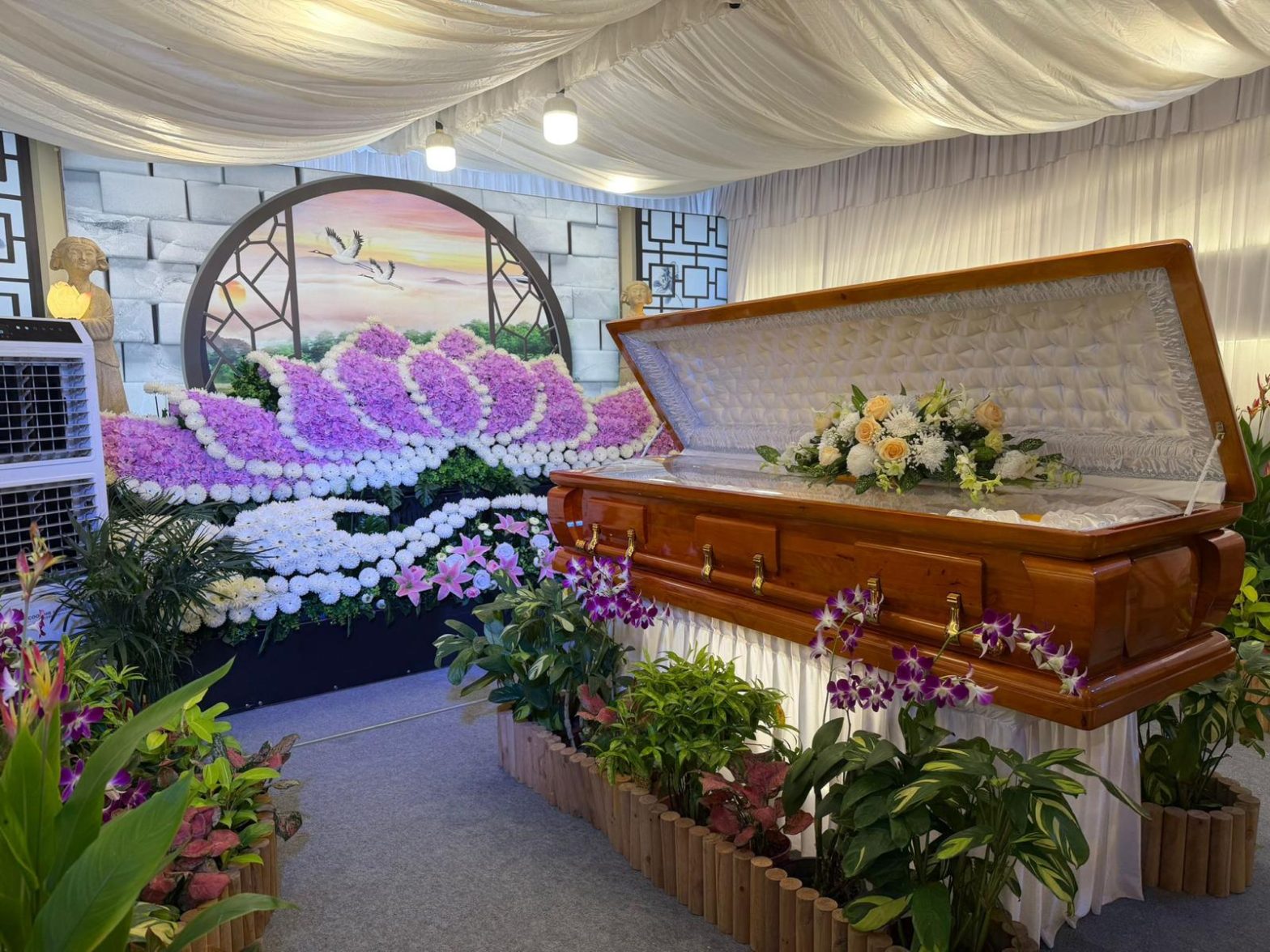
A coffin is selected, traditionally rectangular with three raised humps symbolising heaven, earth, and humanity. Western-style coffins are also commonly used today.
An altar is set up featuring:
- A photograph of the deceased
- Incense and candles
- Food offerings and ritual items
The funeral space is decorated primarily in white and yellow, colours associated with mourning and spirituality. Reflective surfaces and red decorations are avoided.
The Taoist Funeral Ceremony in Singapore
Structure and Duration
A Taoist funeral typically begins with a wake lasting three to seven days, during which family and friends pay their respects. The main rituals are conducted over one or more days, depending on religious requirements and family preferences.
Key Rituals and Their Significance
Common Taoist funeral rituals include:
- Opening the Way (开路) – chants and offerings that guide the soul’s journey
- Crossing the Bridge – a symbolic rite representing passage into the spiritual realm
- Burning of Joss Paper – provides the deceased with money, possessions, and necessities in the afterlife
Each ritual serves to remove obstacles, accumulate merit, and ensure spiritual protection.
Roles of Family Members and Mourners
Family members especially the eldest son play central roles in the ceremonies, leading rituals and demonstrating filial devotion. Mourning is expressed openly, as visible grief is considered a sign of respect.
Mourners participate by offering incense, bowing, and observing rituals under the priest’s guidance.
Use of Music, Chanting, and Symbolic Objects
Taoist priests chant sacred scriptures accompanied by traditional instruments. These chants purify the environment, summon protective deities, and communicate with the spiritual realm.
Incense, candles, bells, and ritual flags are used to sanctify the space and guide the soul.
Symbolism in Taoist Funerals
Colours and Numbers
- White symbolises mourning, purity, and respect
- Muted tones such as black, blue, and brown are acceptable
- Red is avoided due to its association with joy
The numbers three and seven hold spiritual significance and often appear in ritual repetitions and mourning periods.
Significant Objects
- Incense: Purification and communication with spirits
- Candles: Light the soul’s path and symbolise divine presence
- Joss Paper: Represents wealth and necessities for the afterlife
Paper Offerings and Incense
Paper models of houses, clothing, servants, and vehicles are burned to ensure comfort for the deceased. Continuous incense burning maintains spiritual connection and protection.
Post-Funeral Practices
Burial vs Cremation
Traditionally, burial is preferred as it represents returning to the earth. However, cremation is increasingly common in land-scarce Singapore and is believed to free the soul from physical constraints.
Mourning Period
The mourning period typically lasts 49 days, divided into seven weekly cycles. During this time, family members:
- Wear mourning attire
- Perform weekly rites
- Refrain from celebratory activities
These acts demonstrate filial piety and help guide the soul through transitional realms.
Ongoing Rituals and Ancestor Worship
Additional rites are performed at key milestones such as:
- 100 days after death
- One year anniversary
- Three year anniversary
Regular offerings at home altars or gravesites maintain the bond between ancestors and descendants.
Modern Adaptations of Taoist Funerals in Singapore
Modern Influences
Contemporary Taoist funerals often incorporate Western elements such as floral tributes and memorial speeches. Livestreaming services now allow overseas family members to participate virtually.
Balancing Tradition and Practicality
Modern families may opt for:
- Shorter wakes
- Simplified rituals
- Customised funeral packages
These adaptations preserve spiritual intent while accommodating modern lifestyles.
Environmental Considerations
Eco-conscious Taoist funerals are becoming more popular, featuring:
- Biodegradable urns and green burials
- Eco-friendly paper offerings
- Sustainably sourced coffins
Etiquette for Attending a Taoist Funeral in Singapore
Attendees should dress in white or muted colours such as black, blue, or brown. Bright colours especially red are considered inappropriate.
Maintain a respectful and solemn demeanour, avoiding loud conversations or disruptive behaviour. Condolences should be sincere and brief.
Common offerings include:
- White condolence envelopes (白金 / bai jin)
- White flowers
Non-Taoists are welcome to participate by bowing or offering incense. When unsure, quietly observe and follow others’ actions.
Conclusion
For Trusted Taoist Funeral Services in Singapore, call 8900 0000 for immediate assistance and professional guidance.
Taoist funeral practices continue to play a vital role in Singapore’s multicultural society. Far more than ceremonial formalities, these rites reflect profound beliefs about life, death, and spiritual continuity.
Through carefully structured rituals, Taoist funerals guide the soul, comfort the bereaved, and preserve harmony between realms. While traditions evolve to meet modern needs, their core principles filial piety, balance, and respect for the natural order remain unchanged.
Ultimately, Taoist funerals remind us that life and death are interconnected stages of existence. By honouring the departed with sincerity and reverence, families uphold an ancient tradition that continues to offer meaning, solace, and spiritual continuity in an ever-changing world.