Chinese Funeral Packages in Singapore: What’s Included and What It Costs (2026)

Funeral costs in Singapore vary widely depending on religion, wake duration, casket choice, and venue. This guide breaks down what Buddhist, Taoist, and Christian funeral packages typically include at each price tier, based on current market listings from Singapore funeral providers, so families know exactly what they’re paying for.

1. How Package Tiers Work

Most funeral homes in Singapore structure their offerings into three broad tiers — Basic, Standard, and Premium — regardless of religion. The tier mostly determines casket quality, wake duration, venue drapery, and the number of religious officiants (monks or priests) involved. Religion determines the type of rites, offerings, and altar setup.

TierTypical Price BandWake LengthBest For
Basic$4,000 – $9,9003 daysBudget-conscious families, smaller gatherings
Standard$7,000 – $18,0003–5 daysMost families — balances cost and completeness
Premium$15,000 – $40,000+5–7 daysFamilies wanting a fuller ceremonial send-off

2. Buddhist Funeral Packages

Premium Taoist Funeral Services

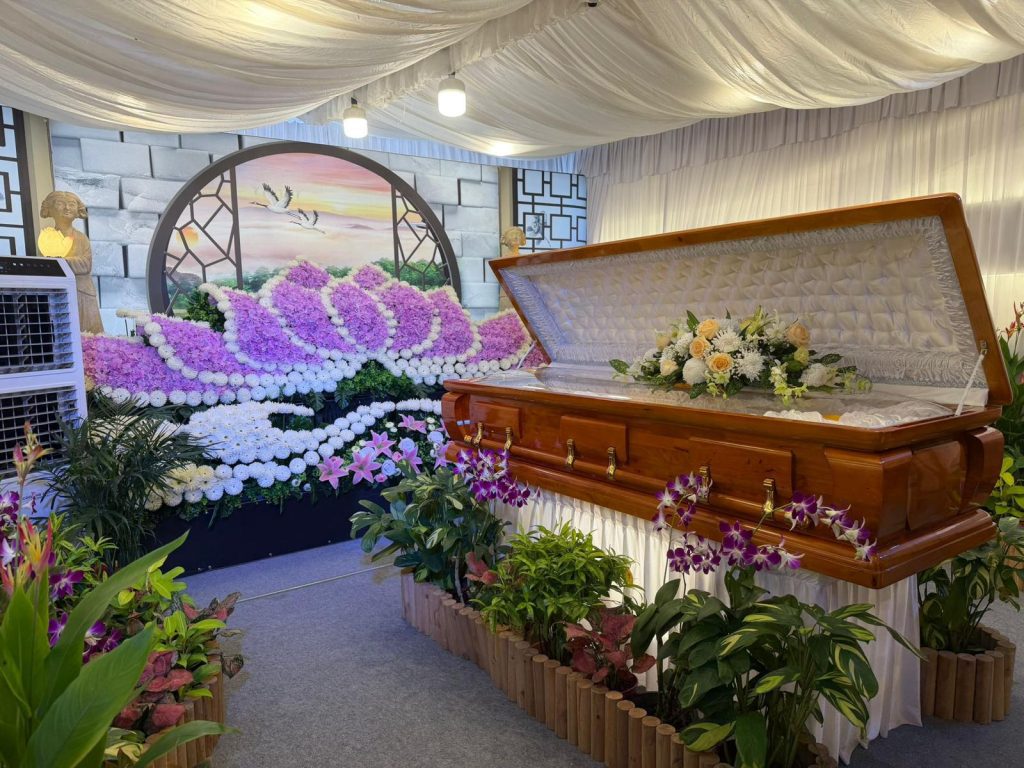
Buddhist funerals are generally the most affordable of the three religious traditions, since the rites involved are comparatively less elaborate than Taoist ceremonies. Packages centre on monk-led chanting, vegetarian offerings, and a Buddhist altar setup.

2.1 What’s typically included

CategoryBasic Package (~$5,900–$6,600)Standard Package (~$10,000–$15,000)Premium Package (~$15,000–$30,000+)
CasketEntry-level casket8-sided upgraded casketLuxury/imported casket
Embalming & preparationIncludedIncludedIncluded, with additional cosmetic care
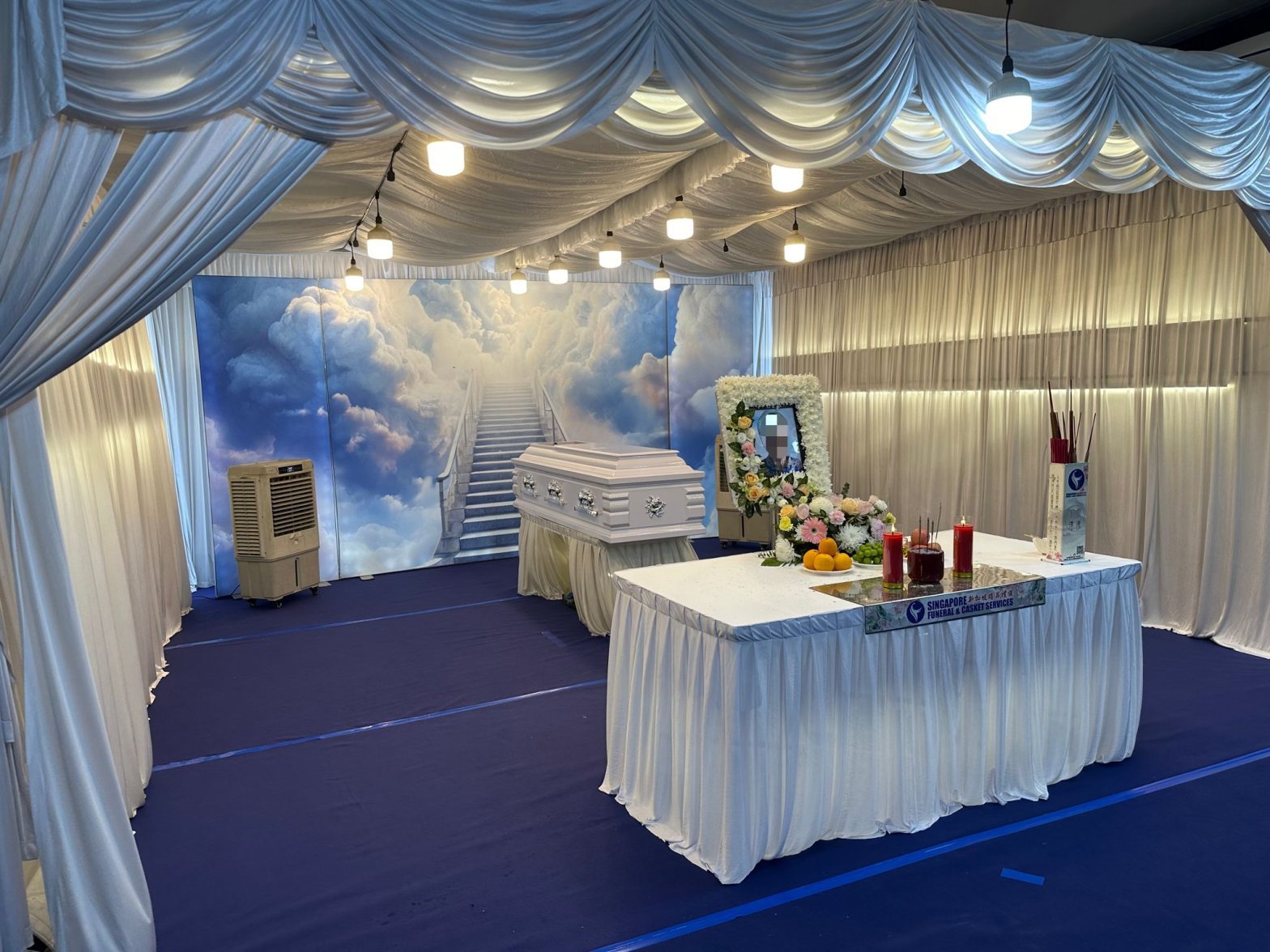
Wake venueVoid deck, basic enclosure, round/square tables, chairs, fansVoid deck with full white drapery, information signagePrivate funeral parlour or premium hall
Religious rites1 monk, standard chanting sessions1–2 monks, additional chanting sessionsMultiple monks, extended/customised chanting
OfferingsBasic paper offerings, incense, candlesLarger paper offeringsElaborate paper mansions, high-end offerings
Altar & decorBuddhist altar, chrysanthemum florals, photo enlargementEnhanced altar setup, additional floralsCustom decor and statues
TransportHearse, air-conditioned bus for guestsSame, often upgraded hearsePremium hearse, additional vehicles
Not usually includedChiller, catering, drinks/snacks, mourning garmentsSame exclusions unless upgradedSome premium packages bundle catering

2.2 Notes on Buddhist pricing

Provider listings show basic 3-day, 2-night Buddhist packages starting from roughly $5,888 before GST, rising to around $6,400 with GST included. Mid-tier packages that add an upgraded casket and cremation coordination run closer to $11,000–$12,000 inclusive of GST. At the premium end, families paying for multiple monks, larger paper offerings, and private venues can expect $15,000 and up.

3. Taoist Funeral Packages
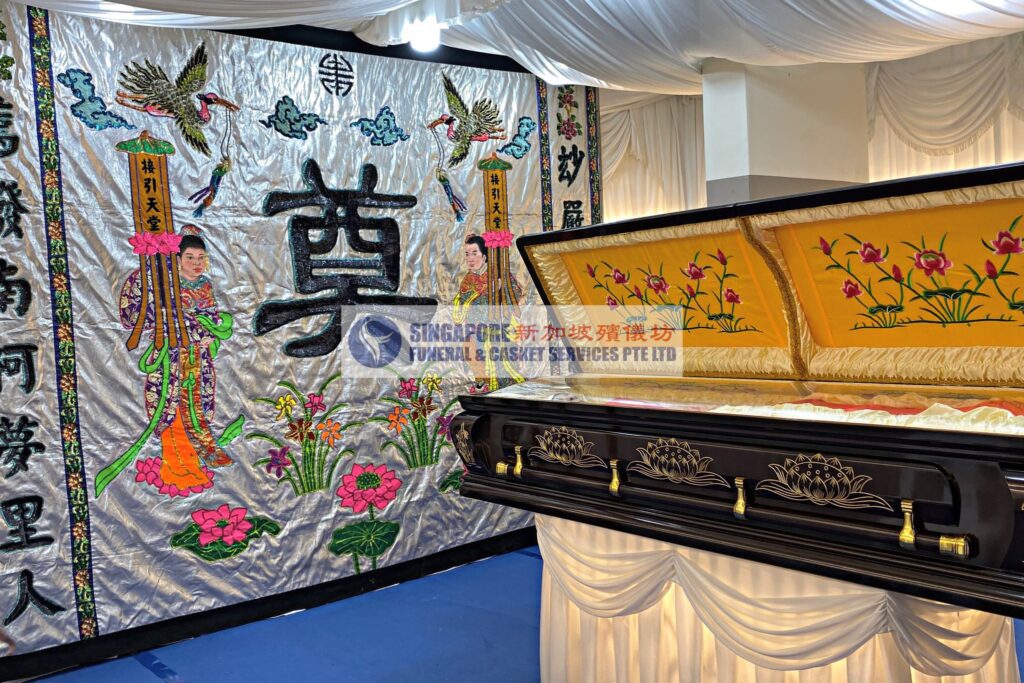
Taoist funerals are typically the most elaborate and costly of the three, owing to the number of rites, the involvement of Taoist priests (daoshi), and dialect-specific customs (Hokkien, Teochew, Cantonese, Hainanese, Hakka). Feng shui consultation is also more commonly bundled in.

3.1 What’s typically included

CategoryBasic Package (~$7,600–$9,900)Standard Package (~$10,000–$18,000)Premium Package (~$18,000–$40,000+)
CasketEntry-level casketUpgraded casketLuxury casket
Wake venueVoid deck with full white draperyVoid deck or funeral parlour, enhanced setupPrivate funeral home, multi-day setup
Religious ritesTaoist priest, standard prayer service (encoffinment, final night, funeral)Multiple priests, additional ritesExtended multi-day rituals, dialect-specific ceremonies
OfferingsPaper house, joss paper, burning trayLarger paper houses and carsElaborate paper mansions, servants, luxury items
Altar & decorTaoist altar, Heaven & Earth blanketEnhanced altar, additional floralsCustom-decorated venue
Lantern & processionLantern and lantern bearer includedSame, often expandedFull procession with band, multiple lantern bearers
Feng shui consultationNot typically includedSometimes includedUsually included
Not usually includedChiller, catering, drinks/snacks, mourning garmentsSame exclusions unless upgradedSome premium packages bundle catering

3.2 Notes on Taoist pricing

Basic Taoist packages currently list from around $7,588–$9,888 depending on provider, with one common basic offering priced at $8,888 ($9,688 with GST). Mid-tier packages that include an upgraded casket and expanded rites run closer to $14,988–$16,337 GST-inclusive. Premium Taoist funerals, with multi-day rituals and extensive paper offerings, can reach $40,000 or more — this remains the widest cost spread of the three religions.

4. Christian Funeral Packages
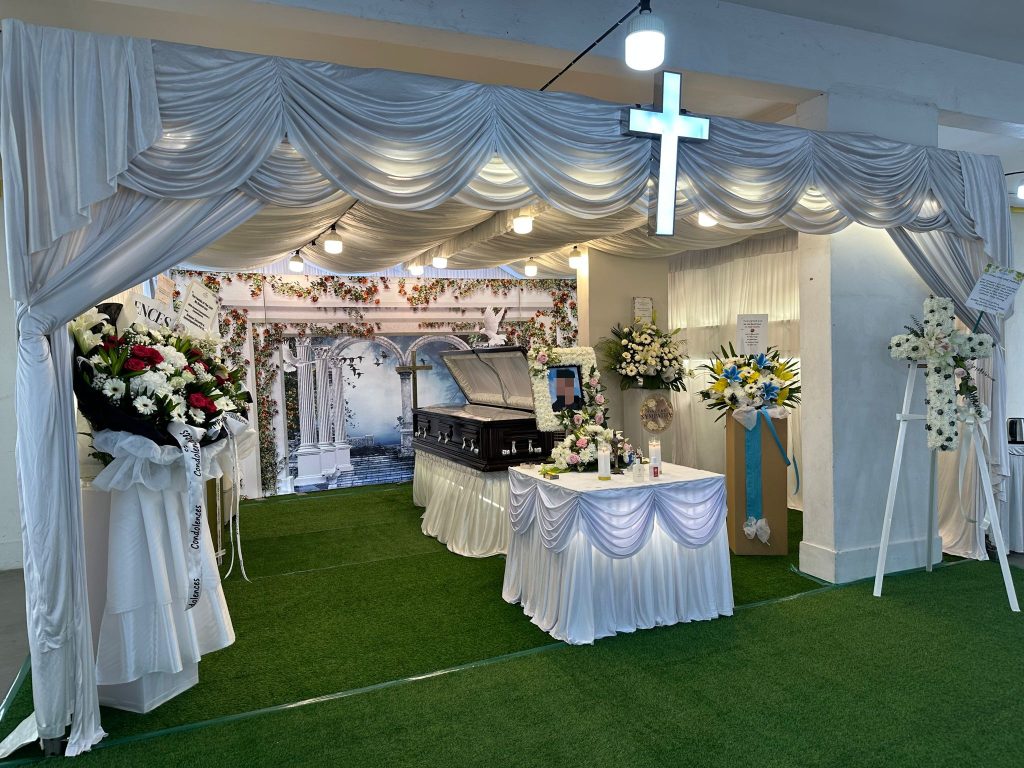
Christian funeral service

Christian (and Catholic) funerals are generally the simplest and least costly, since there are no elaborate offerings or extended rites — the focus is on a church service, hymns, and a final committal prayer.

4.1 What’s typically included

CategoryBasic Package (~$4,200–$5,600)Standard Package (~$7,000–$12,000)Premium Package (~$12,000–$25,000+)
CasketSimple casketUpgraded casketLuxury casket
Wake/service venueChurch or void deckChurch or memorial hall, enhanced setupPrivate memorial venue
Religious servicePastor-led service, hymns, prayersSame, plus eulogy coordinationFull multimedia tribute, extended service
DecorBasic floral arrangements, cross, hymn booksEnhanced floral arrangementsHigh-end floral decoration
TransportStandard hearseSame, occasionally upgradedLimousine service
Not usually includedCatering, mourning garmentsSame unless upgradedSome premium packages bundle catering

4.2 Notes on Christian pricing

Basic Christian/Catholic packages are commonly quoted between $4,200 and $5,600, with some providers offering a 3-day package from about $4,588 and a 5-day version from about $5,088. Standard packages that add an upgraded casket, floral arrangements, and professional eulogy support run $7,000–$12,000. Premium packages with private venues and multimedia tributes can reach $25,000 or more.

5. Cross-Provider Wake Cost Comparison

Because pricing isn’t standardised across the industry, it’s worth comparing quotes. The table below reflects publicly listed wake-only pricing from several Singapore providers as a general benchmark (figures exclude add-ons such as catering and chiller rental):

ProviderChristian/CatholicBuddhistTaoist
Singapore Casket~$5,836 – $6,238~$7,264 – $7,666~$10,472 – $11,643
Singapore Funeral Group~$3,588 – $5,588~$5,888 – $6,588~$7,888 – $9,988
Singapore Funeral Services~$4,588 – $5,488~$5,688 – $6,588~$8,388 – $9,288

Prices differ by wake length, venue type, and what’s bundled in, so always ask for an itemised quote before comparing across providers.

6. Common Add-Ons Across All Religions

Certain services sit outside the core package regardless of religion, and can meaningfully change the final bill:

Add-onTypical Cost
Feng shui / geomancy consultation$1,000 – $5,000
Customised casket or urn upgrade$1,000 – $10,000
Floral arrangements$500 – $3,000
Post-funeral memorial service (7th/49th/100th day, or later)$2,000 – $6,000
Catering for wake guests$1,500 – $5,000
Transport/hearse upgrades$500 – $2,000
Chiller rental (if not included)Varies by provider
Mourning garmentsVaries by provider

7. Government and Regulatory Fees

A few statutory costs apply regardless of religion or provider, and are worth budgeting separately from the package price:

ItemCost
NEA cremation fee (citizen/PR)$100
NEA burial fee (citizen/PR)$315
HDB void deck permit~$200 – $300
Private funeral parlour venue rental (per several days)$3,000 – $10,000

Burial space in Singapore is scarce — Choa Chu Kang Cemetery is currently the only cemetery offering burial, and plots are leased for 15 years rather than sold in perpetuity. This is a key reason cremation remains the far more common choice for Buddhist, Taoist, and Christian families alike.

8. Factors That Push Costs Up or Down

  • Wake duration: Each additional day adds venue rental, staffing, and (if applicable) catering costs.
  • Burial vs. cremation: Cremation is markedly cheaper and more available; burial costs more and is constrained by limited cemetery space.
  • Venue choice: Void decks and community halls are cheaper than private funeral parlours or premium memorial venues.
  • Number of religious officiants: Extra monks or priests, and additional chanting/prayer sessions, add to the cost — this is especially pronounced in Taoist funerals.
  • Scale of offerings: Larger paper houses, cars, and mansions (Taoist), or additional merit-making donations (Buddhist), increase costs.
  • Dialect-specific customs: Taoist funerals following specific dialect traditions (e.g., Teochew vs. Hokkien rites) may require specialised officiants, which can affect pricing.

9. Overall Market Range

Across all religions and tiers, a funeral in Singapore can realistically range from about $5,000 for a basic, no-frills package to $40,000 or more for an elaborate, multi-day premium send-off with extensive rites and a private venue. Most families report paying somewhere in the $5,000–$9,000 band for a standard wake, before add-ons.

10. Choosing the Right Package

When comparing quotes, ask providers for an itemised breakdown rather than a single bundled figure. Confirm what’s excluded (chiller, catering, and mourning garments are commonly left out of base packages) and clarify how many religious officiants and chanting/prayer sessions are actually included, since this is where Taoist and Buddhist packages often differ most in value. For Christian and Catholic families, confirm whether the church service and burial/cremation coordination are both covered in one package or billed separately.
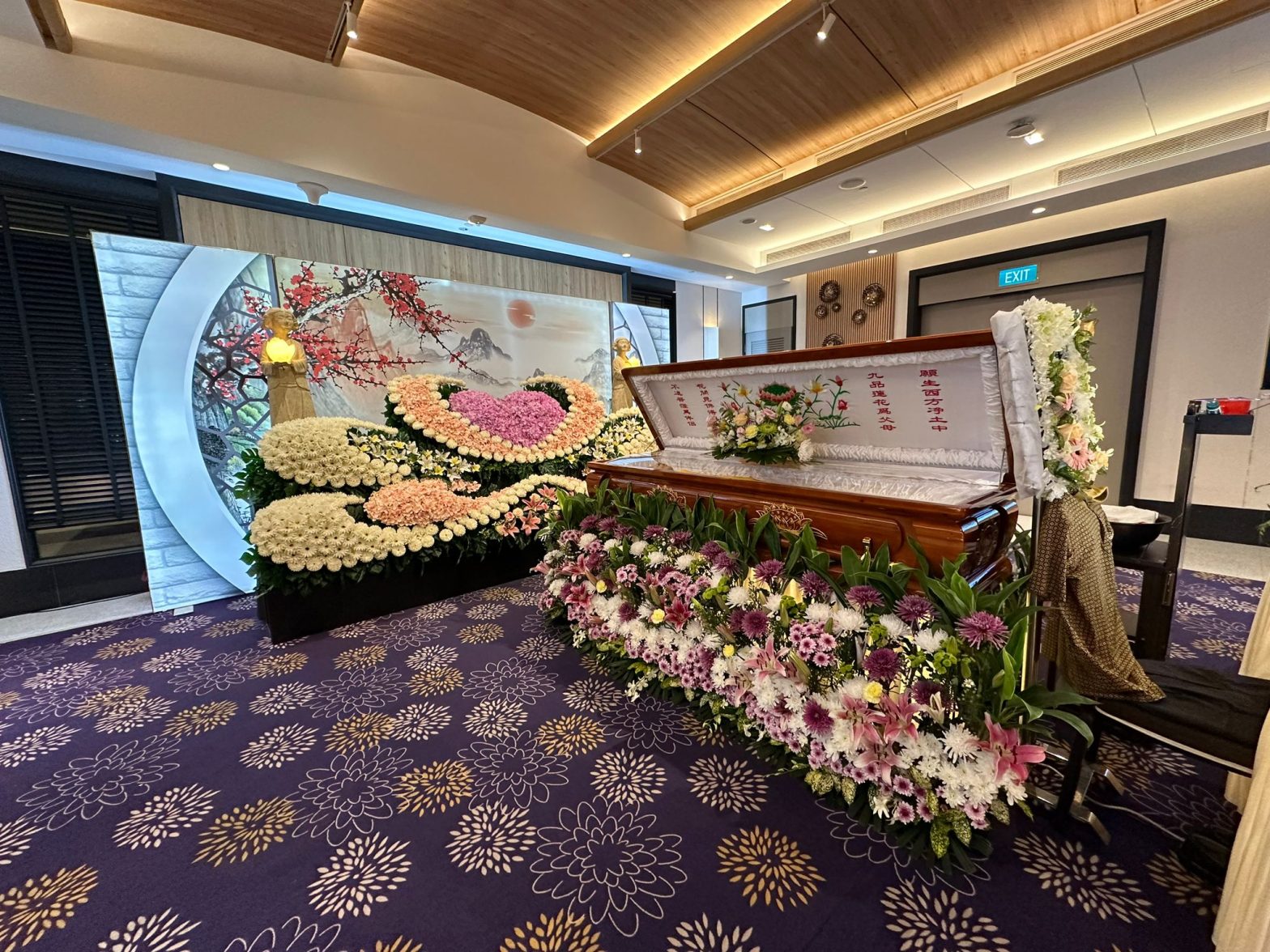
Can my family and I choose not to hold a funeral wake, before the cremation or burial?

In Singapore, families have the right to decide whether or not to hold a funeral wake before the cremation or burial of their loved one. While traditional customs often include a wake as part of the funeral process, it is not a legal requirement. Many factors, including personal preferences, religious beliefs, and cultural customs, influence the decision to hold or forgo a wake.

Cultural and Religious Traditions

In Singapore, the cultural and religious diversity allows for a wide range of funeral practices. Different ethnic and religious communities, such as the Chinese, Malay, and Indian populations, may have their unique customs. For instance, in Chinese culture, it is common to hold a wake for several days, allowing family and friends to pay their respects. Meanwhile, in the Muslim and Hindu communities, the practice may differ, with more emphasis on the burial process rather than an extended wake.

However, regardless of tradition, families have the autonomy to decide whether they wish to adhere strictly to these customs. Modern practices have become more flexible, and some families opt for private ceremonies or a simple direct burial or cremation without a formal wake. This decision may be influenced by logistical factors, personal beliefs, or the preference for a more intimate farewell.

Legal Requirements in Singapore

Singapore’s legal framework for handling deceased persons is managed under the Environmental Public Health (Cemeteries) Regulations, which outline procedures for cremation and burial. However, there is no law mandating that a funeral wake must be held before cremation or burial. The main legal requirements focus on obtaining the necessary permits for burial or cremation, registration of the death, and ensuring that the cremation or burial is conducted in compliance with public health regulations.

For example, after registering the death at the relevant authorities (typically at a hospital or the Immigration and Checkpoints Authority if the death occurred outside of a medical facility), the family must apply for a burial or cremation permit. The choice of whether to conduct a wake is entirely up to the family and is not regulated by law. The focus is more on the correct handling of the body, timely burial or cremation, and adherence to proper public health standards.

Personal and Logistical Considerations

Many families may choose to forgo a wake for practical reasons. The logistics of organizing a wake, especially in Singapore’s urban environment, can sometimes be complicated. Wakes are typically held in funeral parlors or HDB void decks, and obtaining the necessary permits to use public spaces can be an added burden for grieving families. Additionally, rental costs for funeral parlors or the arrangement of a space in a void deck can be substantial, leading some families to opt for a simpler, more cost-effective process of direct cremation or burial.

Furthermore, time constraints may also be a consideration. Some families prefer a quicker and more private send-off, avoiding the emotional strain of a prolonged wake. Others may find solace in the intimacy of a private ceremony with immediate family members, foregoing a wake that could involve a larger group of acquaintances and extended relatives.

In recent times, particularly with the impact of the COVID-19 pandemic, the holding of large gatherings, including funeral wakes, has been limited. Restrictions on crowd sizes and safety measures have influenced many families’ decisions to scale back on traditional practices and opt for smaller, more personal services.

Psychological and Emotional Considerations

While some families find comfort in holding a wake, which provides an opportunity for friends and relatives to gather, offer condolences, and share memories of the deceased, others may find the process overwhelming. Grieving is an intensely personal experience, and the need for privacy, coupled with the emotional burden of organizing a large event, might make the option of forgoing a wake more appealing.

In some cases, the deceased’s personal wishes may play a role in the decision-making process. If the deceased had expressed a desire for a simple or quiet farewell, the family might honor this by skipping a wake altogether.

On the other hand, a wake can also serve as a crucial part of the grieving process for some, offering a structured way for people to come together and remember their loved ones. The support of community and extended family can be an essential part of coping with the loss. This is especially true in cultures where communal grieving is a key part of the mourning ritual.

Modern Trends and Alternatives

In contemporary Singapore, there has been a shift towards more personalized and non-traditional funeral arrangements. This trend has been driven by a combination of factors, including rising costs, changing societal norms, and the influence of Western practices. As a result, some families are choosing more minimalistic or eco-friendly options, such as direct cremation without a wake or even holding memorial services after the cremation or burial has taken place.

For those who wish to honor their loved ones without a traditional wake, alternative options include holding a memorial service at a later date, scattering the ashes in a meaningful location, or even organizing a small, private ceremony at home or in a religious setting. These alternatives can offer the same sense of closure without the formalities of a wake, allowing families to commemorate the deceased in a way that aligns with their personal values and circumstances.

Another modern alternative that has gained popularity is live-streaming the funeral or memorial service, allowing those who are unable to attend in person to participate remotely. This was particularly significant during the COVID-19 pandemic when travel restrictions and safety concerns prevented large gatherings. Such practices have continued post-pandemic, offering a way to include distant relatives and friends in the grieving process.

Conclusion

In Singapore, the choice to hold or skip a funeral wake before cremation or burial is entirely a personal one, shaped by a mix of cultural, religious, legal, and logistical factors. While traditional customs may encourage the holding of a wake, modern practices have become more flexible, allowing families to decide what best suits their emotional needs, financial capabilities, and personal preferences. Families are not legally obligated to hold a wake, and alternatives, such as direct cremation or private memorials, offer viable options for those who wish for a simpler farewell.

By considering the deceased’s wishes, the family’s emotional and logistical capacities, and the unique cultural context of Singapore, families can make informed decisions that provide a meaningful and respectful send-off for their loved ones.

Difference between Burial, Funeral and Cremation

When discussing burial, funeral, and cremation, it is essential to understand that these terms, while interconnected, refer to different aspects of the final disposition of a deceased person.

Funeral

A funeral is a formal ceremony held to honor and remember the deceased. It provides closure and allows family and friends to gather, mourn, and celebrate the life of the individual. Funerals often follow cultural, religious, or personal traditions and may include various elements such as readings, prayers, eulogies, and music. In Western cultures, funerals typically take place in places of worship, funeral homes, or outdoor settings, depending on the preferences of the family or the deceased.

The funeral service is designed to bring a sense of comfort and support to the bereaved. It may include a viewing of the body, especially if a burial follows, giving loved ones a chance to say their final goodbyes in person. The nature of the service can be highly structured, with religious officiants presiding over ceremonies, or more informal, depending on individual preferences. Funerals are common in nearly every culture and have been practiced for millennia as a way to honor the dead.

Burial

Burial refers to placing the deceased’s body in the ground, usually in a cemetery or a designated burial plot. The body is typically enclosed in a coffin, which is then lowered into a grave. This method is one of the oldest and most widely practiced forms of final disposition, with traditions varying widely across cultures and religions.

The process of burial usually accompanies a funeral service, with mourners attending a graveside ceremony where prayers or words are spoken before the body is interred. Burials offer a physical space for loved ones to visit and honor the deceased. Burial plots can often be marked with headstones or memorials, providing a lasting tribute to the individual.

Burial costs tend to be higher than cremation, with factors such as casket selection, embalming, cemetery plot purchase, and memorial expenses contributing to the overall price. In many cultures, burials are considered a respectful way to preserve the body, and this sentiment drives the preference for this method. However, the environmental impact of burial is a growing concern for some, as embalming chemicals, land use, and metal or hardwood caskets contribute to pollution.

Cremation

Cremation is a process in which the body is reduced to ashes using intense heat in a crematorium. The process generally takes two to three hours, after which the ashes, also known as cremains, are collected and either returned to the family or stored in an urn. Cremation provides a range of options for the final resting place of the deceased’s remains. The ashes can be scattered in meaningful locations, buried in a smaller plot, placed in a columbarium, or kept by loved ones.

Cremation is often perceived as a more flexible and cost-effective option compared to burial. Direct cremation, which occurs without a formal funeral or viewing, is typically the least expensive option, as it avoids the costs associated with embalming, a casket, and a burial plot. Families often opt for memorial services to be held at a later time, allowing more freedom in planning compared to the stricter time constraints of burials.

Religiously, cremation has varying acceptance. While many Protestant denominations and other religions have come to accept cremation, traditions such as Judaism and Islam generally prefer burial. Some faiths, such as Hinduism and Buddhism, actively encourage cremation, as it aligns with their spiritual beliefs about the afterlife.

Key Differences

  1. Timing: Funerals connected to burials must occur soon after death, typically within a few days or a week. Cremation offers more flexibility; memorial services can be scheduled at any time after the cremation.
  2. Disposition Options: Burial results in the body being interred in a grave or vault. Cremation provides multiple options, including scattering the ashes, keeping them in an urn, or burying them in a smaller plot.
  3. Cost: Cremation is generally more affordable than burial, particularly if the cremation is performed without additional services such as a viewing or a funeral. Burials require more products and services, including a casket, embalming, and a cemetery plot, which increases the overall expense.
  4. Environmental Impact: Burial involves the use of land, embalming chemicals, and non-biodegradable materials, which can harm the environment. Cremation, while often considered more environmentally friendly, does release greenhouse gases. Alternatives like green burials, which avoid embalming and use biodegradable materials, are growing in popularity for those looking for eco-friendly options.
  5. Religious and Cultural Considerations: Religion often plays a significant role in determining whether cremation or burial is chosen. In some religions, cremation is prohibited, while others encourage it. Cultural traditions also heavily influence these decisions, as some cultures see burial as a way to preserve and respect the body, while others see cremation as a way to release the soul from the body.

Conclusion

The decision between burial, cremation, and the type of funeral ceremony depends on personal, cultural, financial, and religious factors. Burials offer a traditional, tangible way for families to remember the deceased, while cremation provides flexibility and is often seen as a more modern and practical approach. Each method has its advantages, and ultimately, the choice will be influenced by the preferences and beliefs of the deceased and their family.